
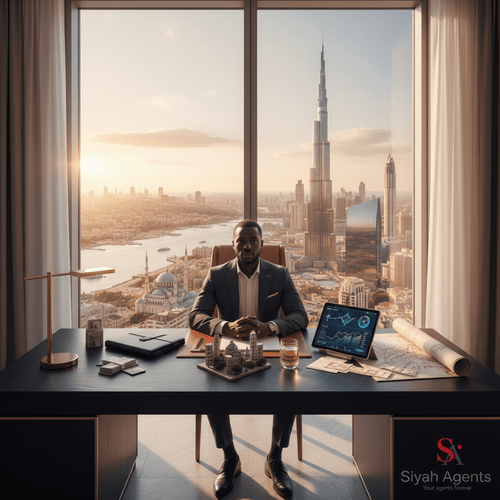
Strategic Capital Protection for African Investors: Istanbul Real Estate or Dubai Liquidity in 2026?
Most African investors have long heard that real estate is inherently safer than liquid assets for wealth protection. However, as 2026 draws near, this assumption is increasingly questionable—especially for Nigerian high-net-worth individuals weighing Istanbul’s burgeoning property market against Dubai’s dynamic liquidity options. The critical question is not only about where returns have been strongest, but which environment offers the most effective protection of capital amid shifting regulations, currency volatility, and evolving global mobility needs.
The idea that holding bricks and mortar in a booming city automatically shields African capital from risk is now outdated. Liquidity, paired with strategic structure, is equally vital in today’s complex geopolitical and regulatory landscape.
For strategic investors, a deep understanding of Istanbul’s property market and Dubai’s liquidity environment is crucial. This article clarifies common misconceptions, highlights core risks and advantages, and shows how a sophisticated African investor should navigate these options in 2026.
The Misconception of Asset Safety
Many African capital protectors focus solely on real estate as a tangible hedge—believing Istanbul’s property values will withstand any crisis. Yet, this overlooks liquidity constraints in cross-border transactions and potential policy shifts that can suddenly alter so-called safe havens.
Conversely, liquidity is often dismissed as riskier or unstable. However, Dubai’s rise as a central global liquidity hub for African investors demonstrates that, with optimal structuring, accessible financial exits and seamless capital mobility can provide resilient protection. So, what truly constitutes robust capital protection in the years ahead?
Istanbul’s Real Estate Market Dynamics in 2026
From 2020 to 2023, Istanbul attracted significant cross-border property investment. This was partly driven by Turkey’s currency depreciation which rendered prime assets cheaper in hard currency terms. Turkey’s sustained infrastructure investment and Istanbul’s strategic Eurasian position support rising demand from aspirational investors.
Property price appreciation in premium districts has outperformed many European markets. Foreign ownership regulations have liberalised, and Turkey’s residency by investment programme remains a compelling incentive for African investors aiming for mobility and a hedge against domestic uncertainties.
Yet nuanced risks persist:
- Currency risk: While lira depreciation may boost returns on USD or GBP terms on paper, sudden capital controls and transactional friction can hinder fund repatriation.
- Liquidity constraints: Selling real estate at true market value can take months, especially during downturns or in less central locations.
- Regulatory volatility: Turkey’s liberal foreign investment policy faces potential shifts amid changing global migration politics.
Istanbul property can hedge inflation and provide legacy value but demands tolerance for market cycles and currency fluctuations.
Dubai’s Liquidity Environment in 2026
Dubai has established itself as a financial conduit linking Africa, the Middle East, and global markets. Its appeal lies in tax efficiency, transparent ownership, strict regulation, and unfettered capital mobility—key factors for Nigerian and broader African investors wary of home-country currency controls.
Dubai’s liquidity options include:
- Short-duration fixed income
- Regulated private equity and venture capital
- Multi-currency portfolios and structured notes
- Tokenised real assets and REITs that enable fractional ownership without direct property transfer delays
The UAE Golden Visa adds robust residency security with minimal bureaucracy.
Key 2026 considerations:
- Exit speed: Dubai’s well-developed secondary markets allow much faster liquidity than property sales.
- Regulatory transparency: UAE financial laws provide investor protections and clear reporting.
- Global reputation: Dubai’s financial stature legitimises African capital for further offshore investment.
Risks to heed include regional geopolitical volatility and tighter anti-money laundering regulations potentially complicating complex African capital flows.
Comparative Asset Security and Risk
Istanbul Property
- Ownership security: Registered land titles and government incentives offer protection, but political unpredictability remains a factor.
- Risk of freezing/expropriation: Rare but possible; regulatory shifts are an unknown wildcard.
- Geographic exposure: Eurasian market affected by local political developments.
Dubai Liquidity Options
- Security of holdings: Strong custodial and free-zone protections reduce risks.
- Cross-border mobility: Assets are portable globally with instant digital reallocation.
- Systemic risk: Lower than frontier real estate but sensitive to global and regional shocks.
No asset is absolutely safe. Istanbul property builds tangible legacy; Dubai liquidity offers unmatched capital agility in regulatory flux.
Exit Strategies and Financial Flexibility
Property liquidity myths are common. Even premier Istanbul penthouses typically require three to twelve months for sale at market value—often longer in weaker markets.
Dubai’s financial products, including funds and tokenised REITs, generally provide exit options within days or weeks. Fast liquidity can be crucial for African investors requiring swift capital redeployment or emergency access.
Hence, 2026 favours investors valuing capital agility and flexibility.
Residency and Mobility Impacts
Istanbul real estate not only stores wealth but facilitates Turkish residency—strategically linking investors to Eurasian business and education networks. The Turkey residency by investment scheme offers efficient pathways but residency is not citizenship and may be subject to future changes.
Dubai’s UAE Golden Visa provides long-term residency, covering family and business partners with no dependency on property holding duration. For many, residency choice intertwines with investment flexibility and family planning.
Geopolitical and Economic Outlook for 2026 and Beyond
Both Istanbul and Dubai face broader geopolitical risks:
- Turkish lira remains vulnerable to external and domestic shocks.
- Regional instability around the Middle East and Eastern Mediterranean may disrupt market dynamics.
- Dubai, despite financial reserves, is exposed to MENA region risks and global economic shifts.
For African investors holding assets across borders, blending property and liquid financial instruments is prudent but demands strict compliance.
All investment and residency strategies should be informed by expert cross-jurisdictional counsel.
How Siyah Agents Supports African Investors
At Siyah Agents programmes, our approach eschews generic advice. We prioritise each client’s unique objectives including global mobility, family security, capital deployment speed, and risk tolerance. Our market intelligence, due diligence, and scenario planning leverage deep local networks in Turkey and the UAE.
For personalised guidance, the free assessment offers a bespoke audit shaping your cross-border capital protection strategy.
Strategic Advice for the Sophisticated African Investor
- Legacy vs Liquidity: Istanbul suits those valuing tangible legacy and residency access; Dubai excels for rapid capital agility and regulatory responsiveness.
- Diversification: Mixing property with liquid financial assets balances volatility exposure.
- Compliance: With evolving tax and regulatory landscapes, meticulous adherence to source of funds and tax requirements is essential.
Conclusion: The Intelligent African Investor’s Path Forward
In 2026, choosing between Istanbul property and Dubai liquidity goes beyond mere returns. Protection of African capital depends on intelligent structuring, ongoing monitoring, and strategic mobilisation aligned to changing risks.
Safeguarding capital requires combining real assets with mobile liquidity. The optimal approach is bespoke, sophisticated, and driven by timely intelligence. Explore Siyah Agents programmes, book your free assessment, or request briefings on Turkey residency by investment and UAE Golden Visa to secure your portfolio’s future.
This article is for informational purposes only. Financial, legal, and residency risks vary. Seek expert advice before investing or migrating.

 Siyah Agents Blog