
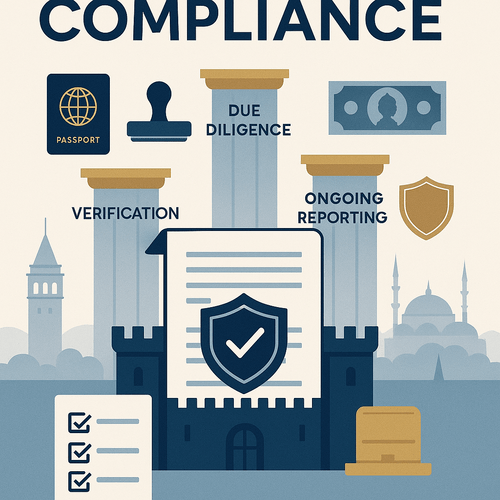
Why compliance is the non‑negotiable in investment immigration
If you are an African professional or investor considering Citizenship by Investment (CBI) or Residency by Investment (RBI), remember this: capital alone does not buy certainty. Legal compliance is the framework that protects your capital, reputation and family. Get it wrong and you risk application refusal, loss of invested funds, or retrospective revocation. Get it right with the right expertise, and you create a resilient outcome that endures regulatory scrutiny and market change.
The legal scaffolding behind CBI and RBI schemes
CBI programmes grant nationality for qualifying investments; RBI schemes grant residence permits that can lead to long‑term status. Both operate inside national law and international standards: anti‑money laundering (AML) rules, tax transparency regimes and bilateral treaties. Oversight bodies, courts and financial regulators all influence outcomes.
While each jurisdiction has its own statutes and practice, three compliance pillars recur across programmes:
- Source‑of‑fund verification: clear, auditable trails for every transferred sum.
- Robust identity and background checks: criminal records, sanctions lists and reputational screening.
- Ongoing reporting and substance: tax filings, company records and proof that investment remains genuine.
These safeguards protect host states and applicants alike. International watchdogs and migration lawyers report growing rigour in vetting—what once looked like a simple transaction now demands the same standards as major corporate transactions.
Internal summary: CBI and RBI are legal processes, not financial promotions. Expect scrutiny that mirrors cross‑border banking and corporate compliance.
Why non‑compliance is costly — and increasingly visible
Mistakes are rarely minor. The consequences of poor compliance or weak legal advice include:
H3 — Application denial and capital loss
Incomplete documentation, opaque fund origins or failed AML checks can cause immediate rejection. In extreme cases, governments have revoked previously granted status when material misrepresentations come to light. Recovery of funds in such scenarios is often slow or impossible.
H3 — Reputational and legal exposure
Authorities increasingly exchange information across borders. A failed application, or a link to sanctioned entities, can spark broader investigations with commercial and criminal ramifications. For professionals whose businesses rely on trust, reputational damage can be more damaging than financial loss.
H3 — Family disruption and operational interruption
Residency and citizenship often underpin school choices, business plans and healthcare access. Non‑compliance risks cascading effects: dependent permits may be cancelled, travel curtailed, or local banking relationships restricted.
Callout:
Non‑compliance is not merely an administrative error — it undermines the entire strategy you intended to build.
What ‘true’ expertise delivers: capabilities that matter
Legal teams that protect clients bring far more than form‑filling. Key capabilities include:
H3 — Comprehensive, multi‑jurisdictional due diligence
The best advisers verify identity and funds across jurisdictions, map complex ownership chains, and reconcile corporate records with tax returns. They anticipate questions a government reviewer will ask and pre‑emptively resolve weaknesses.
H3 — Structuring for compliance and substance
Expert counsel recommends structures that meet local substance requirements—employment, board activity, or local economic contributions—so that residency is not merely nominal. This reduces the risk of subsequent challenge.
H3 — Active policy monitoring and regulatory liaison
CBI and RBI regimes evolve. Practitioners who monitor legislative and administrative changes can pivot strategy quickly, protecting clients from sudden disqualifying shifts. They also communicate with local authorities to clarify ambiguous points when needed.
H3 — Post‑approval governance and reporting
Compliance continues after approval. Good advisers manage renewals, tax filings and any required reporting to ensure status remains secure.
Internal summary: sophisticated expertise bridges the gap between capital and durable, compliant residency or citizenship.
Turkey in focus: a practical example of compliance in action
Turkey’s investment routes illustrate why local legal mastery matters. Thresholds and qualifying options (real estate purchases, capital transfers or job creation) are specified in national regulations, and authorities expect clear documentary proof. Many investors encounter delays when property titles are not fully verified, funds are transferred without correct declarations, or local tax filings are incomplete.
Turkey’s schemes demand detailed legal coordination—from title checks and land registry searches, to ensuring investment funds pass through Turkish banking channels. For those researching the specifics, authoritative summaries of Turkey citizenship criteria and residency options can clarify the mechanics and thresholds.
Case highlights from practitioner reports show that early legal intervention often converts a marginal case into an approved application; conversely, attempts to shortcut local rules commonly lead to protracted delays or refusals.
Callout:
When investing in Turkey, treat legal checks as front‑loaded investments — they reduce time to approval and limit post‑grant exposure.
Practical checklist: secure compliance before you commit capital
- Trace and document funds thoroughly: bank statements, sale agreements and tax history must form a coherent chain.
- Use licensed legal counsel in the destination jurisdiction; demand written engagement terms and scope.
- Run a pre‑eligibility review and sanctions check before making transfers.
- Simplify ownership: minimise complex, opaque offshore layers unless fully justified and documented.
- Maintain transparent, auditable records for five years or more—expect retrospective checks.
- Plan for ongoing obligations: tax filings, renewals and local presence where required.
Internal summary: mitigation starts long before documents are lodged; treat compliance as project management, not a final‑minute chore.
The tangible benefits of doing compliance well
When compliance is central to the strategy, investors gain measurable advantages:
- Higher probability of approval and reduced time to decision.
- Lower risk of post‑grant revocation or audit penalty.
- Better banking and commercial access in the host country.
- Smoother family inclusion and long‑term planning for education and healthcare.
Quantifying benefits varies by programme and personal circumstances; expect outcomes to be expressed as probabilities and ranges rather than certainties. Careful modelling often shows materially higher approval probabilities when robust legal processes are applied.
When and how to seek specialised help
If your profile involves cross‑border corporate ownership, significant family dependencies, or high net worth, seek specialist counsel at the outset. Engage advisers who can present a clear roadmap, ideally with local partners who handle property titles, tax registration and post‑approval renewals. For programme‑specific planning and operational support, consider reviewing curated services and project management offered by reputable firms. A pragmatic first step is a short, focused review of your case via a [free assessment] to highlight likely issues and next steps.
Final thoughts and action steps
CBI and RBI programmes offer powerful opportunities—but they are legal processes first and investment opportunities second. For African professionals and investors, protecting reputation and family wellbeing must be as important as securing access or passports. The simplest way to reduce risk is to work with experienced counsel who will stand behind due diligence, documentation and ongoing compliance.
If you want structured, programme‑level support, explore trusted advisory offerings such as Siyah Agents programmes and start with a bespoke review via their free assessment. For those specifically evaluating routes in Turkey, detailed guides on Turkey citizenship and Turkey residency can clarify thresholds and documentary expectations. Seek expert help early: it’s the most efficient way to convert capital into durable, compliant outcomes.
Sources: Official government CBI/RBI materials; verified migration law firm reports; industry compliance guidelines and Siyah Agents internal case studies.

 Siyah Agents Blog