
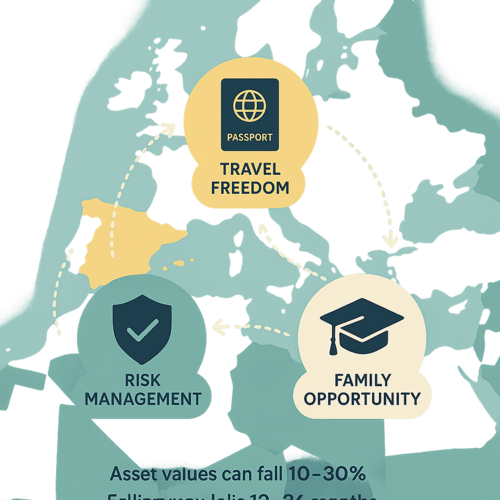
Mobility as Strategy: Why HNWIs are reallocating opportunity
Introduction: a strategic pivot, not a pastime
For many high‑net‑worth individuals (HNWIs) in Turkey, Portugal, Greece and Spain, investing in global mobility is now a deliberate strategy — not a lifestyle accessory. Whether motivated by business expansion, education, wealth preservation, or simply greater freedom of movement, HNWIs treat second residencies and citizenship options as risk‑management tools that sit alongside diversified portfolios and estate plans. This article explains the core motivations, the choices across key jurisdictions, the realistic risks involved, and practical next steps.
What drives HNWIs to buy mobility?
H3 — Travel freedom and operational efficiency
One immediate advantage of residency or citizenship is simplified travel. Residency in EU states such as Portugal or Greece offers easier access to the Schengen Area for business and family movement; other programmes broaden practical visa access for targeted markets. For entrepreneurs and dealmakers, fewer visa hoops mean faster meetings, quicker hires and reduced operational friction.
H3 — Diversifying personal and jurisdictional risk
HNWIs increasingly view mobility as a form of geopolitical and fiscal diversification. A second residency can act as a contingency against sudden policy shifts, economic shocks, or local instability. Rather than abandoning a home country, many use mobility as an insurance layer — an option that preserves flexibility for the family or business in turbulent times.
H3 — Opportunity for family and human capital development
Quality education and healthcare remain decisive motives. Residency in parts of Europe can provide children access to internationally recognised schools and simplified university pathways. For families, this is often the most tangible, long‑term benefit of mobility planning.
Internal summary: travel, protection, family opportunities — those are the three pragmatic pillars driving HNWIs today.
Where HNWIs are placing bets: Turkey, Portugal, Greece, Spain
H3 — Portugal: lifestyle, EU access and structured pathways
Portugal’s residency and investment routes have been popular for their combination of quality of life and EU access. Programmes tied to property or business investment historically provided a route to temporary residence and eventual long‑term rights. These channels also appeal because they combine market‑access benefits with stable public services and a favourable lifestyle. For investors assessing options, compare programme features carefully — eligibility, required stay, and taxation differ by route and are subject to policy change.
H3 — Greece: competitive thresholds and geographic access
Greece’s investment residency options attract investors looking for a relatively lower threshold and a Mediterranean base. With residency often obtainable through qualifying property investments, Greece can offer quick access to the Schengen Area and regional connections while keeping initial outlay comparatively modest. Again, check the latest official guidance as rules evolve.
H3 — Spain: scale, infrastructure and established market demand
Spain combines robust infrastructure and an established international buyer market, making it an attractive command post for business owners seeking European presence. Investment schemes linked to property or capital have historically supported foreign residency with the added benefit of Spain’s global connectivity. Programme categories and conditions vary; due diligence and local counsel are essential.
H3 — Turkey: rapid routes to citizenship with regional benefits
Turkey offers a distinct proposition: faster routes to citizenship with investments targeted at property, jobs, or business, and immediate regional advantages. Its passport offers good regional mobility, though global visa acceptance is narrower than EU passports. Currency and regulatory dynamics in Turkey warrant special attention from investors seeking both residence and a solid asset base.
Callout:
- Each jurisdiction presents a different trade‑off between cost, speed, rights and global reach — choose based on the outcomes you prioritise.
The pragmatic benefits: business, tax planning and succession
H3 — Business expansion and credibility
Residency can make cross‑border business easier: opening bank accounts, hiring local staff, contracting with partners and participating in government procurement or incentives. For some entrepreneurs, a local base materially increases credibility with European or regional clients.
H3 — Tax and financial planning (with caveats)
Some residency options offer tax planning opportunities — for example, access to favourable regimes or double‑taxation treaties that can be beneficial when combined with compliant restructuring. However, tax outcomes depend on residency tests, source of income, and treaty positions. Investors must model probable liabilities conservatively and work with cross‑border tax advisors; outcomes will vary by individual circumstances.
H3 — Succession and asset protection
Second residencies can simplify estate planning across borders and provide heirs with mobility and education options. That said, legal structures should be tested against both home‑jurisdiction and destination‑jurisdiction laws to avoid unexpected tax or inheritance complications.
Risks, uncertainties and realistic ranges to expect
H3 — Regulatory shifts and programme reforms
Authorities periodically adjust investment thresholds, eligible assets, and residency conditions. Historical practice shows that reforms can tighten access or redirect investment focus; occasionally, jurisdictions remove certain qualifying assets entirely. Expect policy change risks;-budget for scenario adjustments.
H3 — Market and liquidity risks
Property purchased for residency can face value fluctuation and liquidity constraints. Historically, yields in European cities vary widely — from low single digits for prime city rentals to higher returns in emerging areas. Investors should model downside scenarios where values fall 10–30% or where selling can take 12–36 months in a slow market.
H3 — Compliance and reputational risk
Enhanced due diligence means transparent source‑of‑fund documentation, tax compliance, and clean records are prerequisites. Failure to comply can result in application refusal, revoked residency, or reputational harm. Plan for ongoing compliance costs and audits.
Internal summary: model a range of outcomes, expect regulatory revision and protect liquidity and compliance.
How to approach global mobility strategically: a six‑step plan
H3 — Practical steps for HNWIs
- Define objectives: travel, education, tax, business access, or family security — rank them.
- Map jurisdictions: shortlist countries that align to your ranked objectives.
- Run tax and legal modelling: test residency and citizenship implications across scenarios.
- Assess liquidity and exit: model sale or exit timelines and costs for assets used to qualify.
- Conduct agent due diligence: vet advisers thoroughly (see checklist below).
- Stage your entry: consider phased investments to limit exposure while maintaining momentum.
Callout:
- Start with clarity of purpose; every mobility decision is a trade‑off.
Agent due diligence checklist for HNWIs
- Verify regulatory authorisations and professional memberships.
- Obtain client references and case studies relevant to your jurisdiction and profile.
- Require a full, itemised fee schedule and clear deliverables.
- Check aftercare commitments (renewals, compliance support).
- Confirm local partnerships and legal counsel in the destination country.
Internal summary: advisers are partners — vet them as you would any co‑investment.
Next steps and how Siyah Agents can help
If you are considering mobility as part of your wealth and family strategy, begin with a measured assessment of objectives and constraints. For a personalised starting point, try a free assessment. For more comprehensive programme design and execution, explore curated Siyah Agents programmes that match investor priorities to specific jurisdictions.
Conclusion: mobility as a resilient asset class
Global mobility is less a status symbol than a deliberate instrument of resilience for the modern HNWI. When combined with careful legal planning, conservative financial modelling and diligent advisory selection, second residencies and citizenship options provide practical benefits for travel, family, business growth and legacy. There are no guarantees — but with the right strategy, they are a powerful addition to a diversified, forward‑thinking wealth plan.
Sources: Verified migration reports; official government policy documents; Siyah Agents internal advisory research.

 Siyah Agents Blog