
Risk realities every investor should know
Introduction: an honest briefing
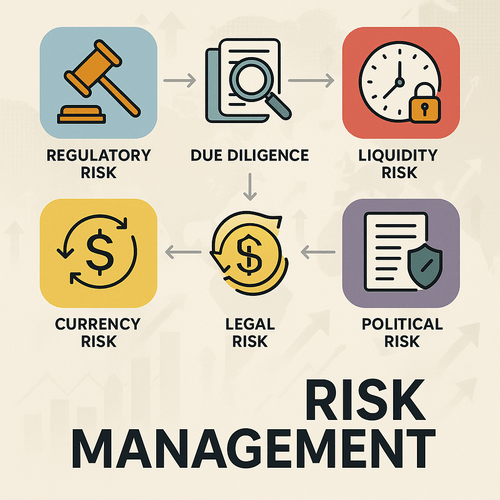
Citizenship by investment (CBI) and residency by investment (RBI) can deliver mobility, family security and portfolio diversification. They can also expose capital to regulatory, market and political hazards that are often glossed over in marketing materials. This guide focuses on the investment risks inherent in CBI/RBI schemes—regulatory change, liquidity, currency, legal title and political volatility—and shows how disciplined due diligence and professional advice reduce, but cannot eliminate, those risks.
Internal summary: treat CBI/RBI as a sophisticated investment; assess policy risk, liquidity profile, currency exposure, legal clarity and political stability before committing capital.
Regulatory risk: the ground can shift underfoot
H3 — Policy changes and eligibility shifts
CBI and RBI programmes are national policy tools. Governments revise thresholds, eligible assets and vetting standards for political or fiscal reasons. An investment that qualifies one year may not the next if authorities tighten rules or suspend programmes. Investors should therefore expect policy movement and model downside scenarios, not assume static rules.
Practical implications
- Check that the qualifying criteria are fixed in law or guidance at the time of investment; where only ministerial decrees apply, treat the programme as more changeable.
- Assume rules may be tightened; plan contingencies if your intended exit depends on unchanged thresholds.
Inconclusive: precise likelihoods of future changes differ by country and are inherently uncertain; monitor official channels continuously.
Due diligence and compliance risk: documentation is decisive
Robust vetting is now standard. Authorities expect clear, auditable evidence of funds, lawful origins and clean personal records. Failure to present adequate documentation can delay or derail approval even after the investment is made. Enhanced due diligence can also reveal past legal or tax issues that require remediation.
Mitigation steps
- Compile audited financials, clear proof‑of‑sale documents and credible bank transfer records before committing funds.
- Engage independent compliance advisers to pre‑clear complex ownership structures or trust arrangements.
Callout:
- Compliance failures are a leading cause of delayed approvals and rejections—invest early in verification.
Liquidity risk: the asset may not free your capital quickly
H3 — Real estate illiquidity and lock‑in periods
Real estate is the most common qualifying asset for RBI/CBI. Yet property markets differ: prime urban stock in liquid markets sells relatively quickly; niche developments marketed to investor applicants may be thinly traded. Many programmes also impose mandatory holding periods—often three to five years—during which sale can jeopardise status. That creates a dual risk: market liquidity and regulatory lock‑in.
H3 — Financial instruments and fund routes
Fund or bond routes can offer superior liquidity compared with bricks and mortar, but they rely on fund governance, redemption windows and local market depth. Redemption terms vary and may be slow in stressed market conditions.
Practical rule of thumb
- Treat CBI/RBI investments as medium‑to‑long term capital commitments; model five‑year scenarios for both returns and exit timing.
Currency risk: local exchange rates can erode value
H3 — Exchange‑rate exposure and repatriation issues
Investing in a host country exposes you to its currency. Sudden depreciation can reduce the real value of your holding when converted back to your home currency. Conversely, currency gains can magnify returns. Repatriation rules and capital controls can compound risk if authorities restrict outflows during stress.
Mitigation tactics
- Consider multi‑currency allocations and, where available, use hedging instruments for large transfers.
- Plan the timing of repatriation and adopt staged exits to reduce single‑point FX risk.
Inconclusive: short‑term FX moves are inherently unpredictable; model scenarios rather than forecasts.
Legal risk: titles, contracts and jurisdictional exposure
H3 — Title clarity and land‑registry quality
Clear title is non‑negotiable. In some markets, land registries are modern and reliable; in others, records are fragmented or contested. Title disputes can materially delay ownership transfer and jeopardise the qualifying investment. Joint ownership, developer guarantees and escrow arrangements require careful legal structuring.
H3 — Contract law and dispute resolution
Contracts are often governed by local law. Where protections or enforcement mechanisms differ from your home jurisdiction, litigation or arbitration can be lengthy and costly. Always ensure dispute‑resolution clauses, escrow protections and performance bonds are appropriate and enforceable.
Practical checklist
- Use local counsel with cross‑border litigation experience.
- Insist on escrowed payments and clear transfer milestones before finalising funds.
Political risk: stability and reputational considerations
H3 — Regime shifts and programme continuity
Political events—elections, sanctions or social unrest—can prompt sudden policy changes affecting CBI/RBI programmes. While outright expropriation is rare, other outcomes (tax changes, visa denials, shifting diplomatic ties) can reduce the anticipated value of your investment. Choose jurisdictions with predictable legal frameworks and transparent governance where possible.
H3 — Reputation and secondary impacts
Some CBI schemes attract scrutiny at international level; association with a controversial programme can carry reputational risk for high‑profile investors. Assess how a programme is perceived by banks, governments and business partners in your main markets.
Balancing risk and return: mitigation strategies that work
H3 — Diversification and staging
Avoid concentrating CBI/RBI capital in a single jurisdiction or asset class. Consider staged investments: begin with more liquid fund routes where available, then transition to longer‑term property if it fits your objectives.
H3 — Legal and fiscal planning
Early tax and legal advice reduces surprises. Confirm how the new status affects tax residency, reporting obligations and estate planning across jurisdictions. Structure ownership to offer clarity of rights and to simplify compliance checks.
H3 — Independent verification and escrow protections
Use independent third‑party escrow agents, verifiers and accredited valuers. Contractual protections—performance bonds, escrow triggers and conditional closings—lower execution risk.
Callout:
- Robust structuring and independent verification materially reduce downside; they do not eliminate systemic or political risk.
Decision framework: a short investor checklist
- Confirm current official eligibility and whether qualifying terms are in statute or subject to change.
- Assess liquidity: estimate realistic resale timelines and discount scenarios.
- Stress‑test FX exposure and repatriation options.
- Obtain local legal review of title, contract and dispute options.
- Budget for compliance, advisory and contingency costs on top of headline investment.
Internal summary: a disciplined, documented evaluation reveals whether the risk profile matches your investment objectives and time horizon.
Conclusion: prudence meets opportunity
CBI and RBI schemes can be legitimate, high‑value parts of an investor’s cross‑border strategy—but they carry real, sometimes underappreciated risks. Regulatory shifts, illiquidity, currency moves, legal ambiguity and political events can all affect outcomes. The investor’s advantage comes from rigorous due diligence, conservative scenario modelling and expert local advice.
For tailored, evidence‑based risk assessment and bespoke structuring of CBI/RBI investments, consult Siyah Agents. Their hands‑on experience and local partner networks help investors reduce avoidable exposures and make informed decisions.
Ready for a confidential, expert review of your CBI/RBI strategy? Contact Siyah Agents for a tailored risk assessment and step‑by‑step plan.

 Siyah Agents Blog