
Residency in the UAE: family stability and practical freedoms
Introduction: why families choose the UAE
Many families see UAE residency as a strategic move: safer cities, modern healthcare, and clear rules for sponsoring loved ones. For parents weighing education, quality of life and regional mobility, the Emirates offers a structured residency system that supports family cohesion while providing practical benefits for daily life and work. This guide explains who can be sponsored, what travel and local advantages residents gain, and the key steps and risks families should expect.
Family sponsorship: who can be included and basic rules
H3 — Typical sponsors and dependants
UAE residency frameworks allow many categories of residents to sponsor family members once they meet eligibility rules. Common sponsors include employees with valid work permits, investors, property owners (in some emirates), and certain professionals. Dependants typically encompassed are: spouse, unmarried children (age limits vary), and, in some cases, parents who meet dependency conditions. Exact eligibility—including age caps for sons and the acceptance of unmarried partners—differs by emirate and visa category and changes from time to time (inconclusive on specific age thresholds; check current government guidance).
H3 — Financial and accommodation requirements
To sponsor family members, sponsors normally must demonstrate a minimum monthly salary and suitable housing—often a registered tenancy contract. Income thresholds frequently range from modest professional wages to higher levels for sponsors seeking to include parents. Female professionals and recent regulatory updates may face different income criteria. Always verify the latest figures with official sources before applying.
Callout:
Confirm income and housing proofs before you start: incomplete evidence is the most common cause of delay.
Travel and mobility advantages for residents
H3 — Regional ease of movement and visa processing benefits
UAE residents enjoy practical travel conveniences. Within the Gulf region, residency can simplify short‑term travel and, in some cases, visa‑on‑arrival arrangements for neighbouring states. For wider international travel, holding UAE residency often helps with visa interviews and processing where consulates view the UAE as a low‑risk jurisdiction. This is not a guaranteed visa waiver—passport nationality still determines entry rights—but residency frequently smooths application pathways.
H3 — Airport and domestic mobility perks
Residents commonly access fast lanes at major airports and can use eGates where eligible, saving time on family travel. Residency also simplifies moves between emirates for work, schooling and healthcare, reducing administrative friction for families.
Healthcare, education and everyday quality of life
H3 — Healthcare access and insurance expectations
One of the UAE’s strongest draws is access to high‑quality healthcare. Residents must hold health insurance; employers in principal emirates like Dubai and Abu Dhabi typically provide coverage for employees and sponsored dependants. Private plans vary in cost and scope; families often supplement employer cover with top‑up policies for broader provider access. The standard of care is high, but out‑of‑pocket costs can be significant without suitable cover.
H3 — Schools and family services
International schooling options are plentiful—British, American, IB and other curricula are widely available. School fees vary greatly by school and grade; families should obtain current fee schedules early in planning. The UAE’s mix of cultural amenities, parks and family facilities contributes to an accessible urban lifestyle, though monthly costs can be higher than in many home countries.
Callout:
Budgeting early for education and insurance avoids surprises—these are major items in family residency planning.
The residency application process and timelines
H3 — Core steps to obtain residency for family members
Procedures typically follow a clear sequence: sponsor confirms eligibility; documents are prepared and attested; dependants undergo medical checks (adults) and biometrics; residency visas and Emirates IDs are issued. Sponsors must present passports, marriage and birth certificates, tenancy or ownership proofs, salary certificates and health insurance.
H3 — Practical timelines and renewals
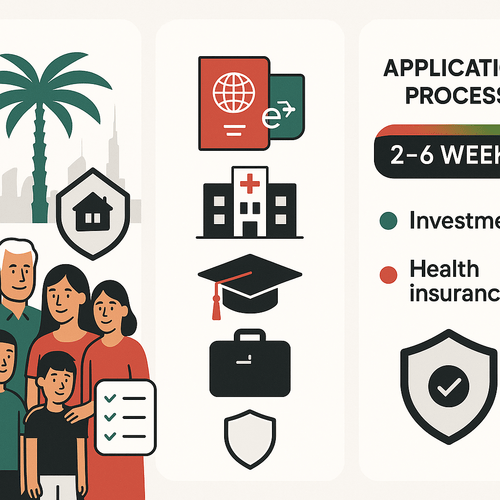
Processing for family residency cases commonly takes 2–6 weeks when documentation is complete, though complications or busy periods can extend this. Residency visas are usually issued for periods of one to three years and must be renewed on time to avoid penalties. Fees and specific processing durations vary by emirate and visa type; consult official immigration channels for current timelines.
Financial and legal risks to consider
H3 — Sponsorship obligations and income risk
Sponsorship carries ongoing responsibility. If a sponsor loses their job or visa status changes, sponsored family members may need new arrangements or risk visa cancellation. Maintaining employment, housing and insurance is therefore critical. Plan contingencies for employment changes and ensure you understand visa transfer or re‑sponsorship options.
H3 — Regulatory change and eligibility shifts
UAE immigration policies evolve—age caps, sponsorship rules and income thresholds have been amended in recent years. While the authorities often provide transition measures, significant regulatory shifts can affect long‑term plans. Families should keep abreast of official updates and consider professional advice to manage compliance risks.
H3 — Legal complexities in family matters
Family law, custody and inheritance issues can become complex when multiple jurisdictions are involved. UAE law may interact with the family’s home legal system in ways that affect custody, maintenance and estate planning. Specialist legal advice is recommended where such issues are a possibility.
Practical checklist for families preparing to sponsor dependants
- Verify sponsor eligibility and current income thresholds with immigration authorities.
- Assemble and apostille/certify essential documents: birth, marriage, and educational certificates.
- Secure appropriate health insurance for all dependants.
- Confirm school availability and fees in your chosen emirate.
- Prepare a contingency plan for employment changes affecting sponsorship.
Conclusion: weighing opportunity against responsibility
Residency in the UAE offers families a compelling package—structured family sponsorship, regional travel conveniences, high‑quality healthcare and strong schooling options. Yet these benefits come with obligations: clear financial thresholds, ongoing insurance and housing requirements, and the need to manage regulatory change. Approaching the process with thorough preparation, up‑to‑date information and contingency planning helps families convert the UAE’s potential into a secure, comfortable life abroad.
Sources: Official UAE immigration and residency guidance; verified immigration consultancy reports; expat family lifestyle analyses.

 Siyah Agents Blog