
Reuniting the family: practical routes and realistic expectations
Introduction: why family reunification matters
Family reunification is often the single most important reason people migrate. For families separated by work, conflict, or opportunity, reunification programmes offer legal pathways to restore daily life under one roof. This guide explains common routes, eligibility requirements, realistic timelines, procedural steps and sensible precautions for families considering reunification. It is written for parents, partners and extended families who want clear, practical guidance—not false promises.
Internal summary: prepare thorough documentation, expect administrative delays, and seek professional advice for complex cases.
The principal family reunification programmes
H3 — Spouse and partner sponsorship
Most countries provide a route for citizens and legal residents to sponsor spouses and long‑term partners. Requirements typically include proof of a genuine relationship, minimum income or maintenance funds, adequate accommodation and, in some places, a language or integration promise. Unmarried partners must usually demonstrate cohabitation or a demonstrable long‑term relationship.
H3 — Children and parental reunification
Minor children are commonly eligible for reunion with a sponsoring parent. Many jurisdictions also permit applications for dependent adult children in restrictive circumstances (serious health needs or disability). Parents of adult migrants may be eligible in some programmes, often subject to strict financial and dependency tests.
H3 — Extended family and humanitarian routes
Some countries allow wider family reunion—siblings, grandparents or other dependants—primarily on humanitarian or discretionary grounds. Refugee resettlement and humanitarian corridors may include family reunification clauses, but these pathways are limited and prioritised according to vulnerability.
Internal summary: nuclear family routes are the most reliable; extended family channels exist but are more constrained.
Eligibility: what governments commonly require
H3 — Proof of relationship and identity
Expect robust documentary evidence: marriage certificates, civil partnerships, birth and adoption papers, photographs, correspondence and shared financial records. Where documents are absent, corroborating affidavits or third‑party attestations can help but increase scrutiny.
H3 — Financial means and accommodation
Sponsors often must demonstrate a minimum income or savings level and suitable accommodation to host dependants. Thresholds vary by country and family size; applicants should verify current official guidance.
H3 — Character and health checks
Applicants and sponsors usually submit criminal record certificates and medical checks. Unspent serious convictions frequently bar reunion; communicable diseases may trigger additional health measures.
Internal summary: compile original documents and certified translations early; financial and housing proofs are commonly decisive.
Timelines and procedural stages: expect patience
H3 — Typical application stages
- Preparation: gather, notarise and translate documents; obtain police certificates.
- Submission: file at the relevant consulate or online portal.
- Biometrics and interviews: identity verification and relationship assessment.
- Decision: approval, request for further evidence, or refusal.
H3 — How long will it take?
Processing times vary greatly by country, visa category and caseload. Realistic ranges are:
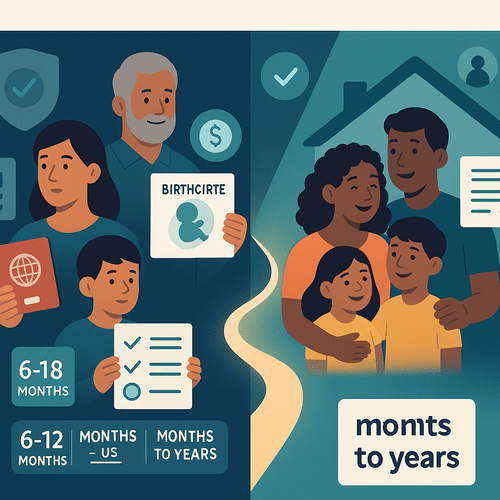
- Spouse and partner visas: typically 6–18 months;
- Children and parental routes: often 6–12 months, but complex cases can extend further;
- Humanitarian family channels: variable—months to years depending on capacity and criteria.
These are indicative ranges; busy consulates, appeals or additional checks can extend waiting times significantly.
Callout:
Plan for delays: even well‑prepared cases can face long waits; build contingency plans for housing, schooling and income.
Internal summary: start early, allow ample time for evidence gathering, and prepare for possible interviews.
Policy context and evolving legal frameworks
H3 — Political pressures and rule‑changes
Family reunification sits at the intersection of migration policy and domestic politics. Governments periodically tighten income thresholds, documentation requirements or processing rules in response to public debate. Such changes can appear with limited notice—always verify the most recent official guidance before applying.
H3 — Humanitarian exceptions and discretion
Some regimes provide discretion for vulnerable cases (e.g., refugees, victims of trafficking). Humanitarian pathways are usually limited and require specialised legal argumentation. Evidence and urgency drive outcomes in these channels.
Internal summary: policy changes can alter prospects quickly; monitor official advisories and seek current legal counsel.
Practical steps to maximise your chance of success
H3 — Document organisation and authenticity
Collect and index all primary documents early. Use certified translations and apostilles where required. Maintain a single file (digital and hard copy) that contains every document and its certified translation—this reduces response time if authorities request further evidence.
H3 — Financial readiness and accommodation evidence
Prepare bank statements, employment letters, tax returns and a clear housing plan. Some countries accept sworn declarations or temporary housing affidavits during initial application stages, but permanent proof is typically required for final permissions.
H3 — Demonstrating genuine relationships
Provide multiple forms of corroboration: joint accounts, shared bills, child‑care receipts, correspondence over time and photos from different occasions. For unmarried partners, evidence of continuous cohabitation and joint commitments is often decisive.
Callout:
Transparency is essential: full disclosure—especially of past separations, previous relationships or prior immigration refusals—prevents later credibility problems.
Internal summary: thorough, transparent documentation and clear financial proofs are the foundation of a robust application.
Red flags and common causes of refusal
- Incomplete or forged documents; inconsistent statements across submissions;
- Insufficient income or inadequate housing evidence;
- Undisclosed criminal history or adverse immigration records;
- Suspicion of sham marriages or manufactured relationships for immigration advantage;
- Failure to respond promptly to authority requests for extra information.
If a refusal occurs, review options quickly—administrative reviews and appeals have strict deadlines. Seek legal counsel to understand merits and next steps.
Internal summary: avoid shortcuts and maintain clear communications with authorities.
Real‑world, cautious examples
H3 — The reunited family after complex checks
A couple lived apart for several years while one partner built a business overseas. By retaining all correspondence, joint financial documents and proof of periodic visits, they secured a spouse visa in under a year. Their case shows how detailed records of intent and continuity help.
H3 — The delayed parental reunion
A retiree sponsoring an elderly parent faced delays due to insufficient evidence of long‑term financial support. After submitting pension statements, transfer records and a formal care plan, the application moved forward. The lesson: anticipate and remedy gaps early.
Internal summary: examples underscore the premium on documentary completeness and financial clarity.
Next steps: preparing for your application today
- Start by listing required documents and commissioning translations and apostilles early;
- Create a timeline that accounts for gathering police clearances from all relevant countries of residence;
- Prepare a financial file and a housing plan showing long‑term suitability;
- Keep a written log of communications and visits that evidence genuine relationship ties;
- Consult a reputable adviser early if your case involves refugees, complex custody or extended family claims.
Callout:
Immediate action: draft a complete document checklist this week and identify any missing items that require time to obtain.
Internal summary: early organisation and professional advice reduce the risk of avoidable refusals and delays.
Conclusion and invitation to get expert support
Family reunification is emotional and often legally complex. Success depends on evidence, patience and a realistic plan. While no outcome can be guaranteed, careful preparation, authentic documentation and prompt responses to authority queries improve your chances substantially. If you are preparing an application—or have faced a refusal—consider professional support to navigate requirements and appeals.
For expert, family‑focused immigration advice and hands‑on support, contact Siyah Agents’ family reunification team for a confidential assessment of your circumstances and tailored next steps.
Sources: Official immigration authorities’ guidance; verified migration policy reports; Siyah Agents advisory experience.

 Siyah Agents Blog