
A passport that buys peace of mind
Introduction: more than mobility
For many English‑speaking African professionals and investors, a second passport is often framed in transactional terms—visa lists, tax planning, market access. Those are real benefits. But there’s a subtler, no less powerful effect: psychological freedom. This is the sense of control, reduced anxiety and greater life‑planning confidence that comes when borders are not an obstacle to opportunity.
Internal summary: second citizenship can cut everyday stress and expand personal and professional options—when approached with clear goals and sound advice.
What psychological freedom looks like
Defining the concept
Psychological freedom combines autonomy, security and choice. It matters for mental health: having reliable options reduces chronic uncertainty, a known contributor to stress. For internationally active professionals, the freedom to move, transact and shelter family members without bureaucratic friction changes daily decision‑making, from whether to accept a last‑minute client meeting to where to educate children.
Evidence base (broad and careful)
Migration and wellbeing scholarship links mobility and perceived life control, though measurement varies across studies (migration and wellbeing literature). Where findings are stronger, they show that reduced travel friction and clearer relocation options improve subjective wellbeing and reduce anticipatory anxiety among those who move frequently for work.
Internal summary: psychological freedom is measurable in reduced stress and improved perceived control, even if precise effects differ by context.
The stress of restricted mobility: what African professionals face
Practical daily stressors
- Lengthy visa processes, repeated consular visits and uncertain decisions.
- Missed opportunities when urgent travel is delayed by administration.
- The cognitive load of planning around unpredictable border rules.
Statistical context (verified indices)
Global mobility indices consistently show that many African passports grant visa‑free access to significantly fewer countries than western passports. That asymmetry translates into practical barriers: more paperwork, longer planning cycles and, ultimately, more stress for frequent travellers.
Internal summary: constrained passport power imposes repeated micro‑stresses that add up for frequent travellers.
How a second passport reduces stress—three mechanisms
1. Simpler, faster travel so plans stay intact
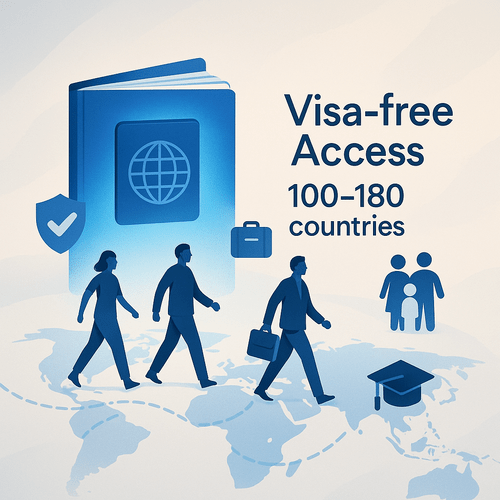
Second passports commonly provide far broader visa‑free or visa‑on‑arrival access—often to 100–180 countries depending on the document. That range speeds deal‑closing, emergency travel and family visits, cutting the anxiety tied to consular uncertainty.
2. A psychological safety net for crises
When political or economic instability disrupts a home country, a second passport offers a practical exit option. Knowing a credible contingency exists reduces ongoing worry and supports clearer decision‑making under pressure.
3. Confidence in long‑term planning
Second citizenship changes horizon planning: education, healthcare choices, business expansion and retirement planning become less speculative. That shift from reactivity to strategy reduces chronic stress and increases perceived control.
Internal summary: broader travel rights, an exit option and clearer long‑term plans each cut stress in concrete ways.
Opportunity unlocked: where reduced stress meets practical gains
Business and career advantages
A passport with greater mobility eases access to jur isdictions for business registration, banking and investment. Practically, this can shorten deal cycles and strengthen partner confidence. For investors, fewer travel hurdles mean more flexible oversight of cross‑border portfolios.
Family and lifestyle benefits
Second citizenship often enables easier schooling options, healthcare access and the choice to split time between markets for tax or lifestyle reasons. For many families, these benefits materially reduce everyday friction and anxiety.
Internal summary: psychological ease translates into real‑world advantages—better deals, smoother family logistics, clearer succession planning.
Case notes: illustrative, anonymised examples
Note: the following are composite examples based on Siyah Agents’ advisory experience and anonymised client outcomes; they illustrate typical ways a second passport can alter stress and opportunity. Individual results vary.
Composite example A — The entrepreneur who closed deals faster
A founder with an African passport had repeatedly lost time on European business trips owing to visa delays. After obtaining a second passport through an investment pathway, the founder reported closing two international partnerships within a year—opportunities that would previously have required protracted consular waiting. The key change was reduced administrative delay, enabling rapid in‑person meetings.
Composite example B — The family with a medical contingency plan
An investor family obtained alternative citizenship as a contingency for emergency medical care abroad. When a child required specialist treatment, the family used their second passport to access care quickly, describing a marked reduction in acute stress during the episode.
Composite example C — The academic with frictionless mobility
An academic secured visiting fellowships across Europe more readily with a second passport, reporting fewer administrative rejections and a smoother calendar of short‑term engagements—an outcome that accelerated research collaborations and career progression.
Caveat: these vignettes are illustrative composites from advisory experience, not individual case reports with public citations. Outcomes depend on passport, visa rules and personal circumstances.
Internal summary: composites show reduced friction and clearer options, but are not guarantees of similar outcomes.
Caveats and realistic expectations
No passport erases all stress
- Not all second passports grant equal travel freedom—research specific visa access before committing.
- Second citizenship carries responsibilities: tax implications, legal duties and potential requirements for physical residency or service in some jurisdictions.
Policy and reputational risk
Citizenship‑by‑investment schemes evolve. Programmes may tighten vetting, alter benefits, or change processing times; investors should expect policy movement and prepare accordingly.
Evidence limitations
Although migration and wellbeing studies indicate associations between mobility and lower stress, the evidence base specific to African investors and second passports is developing—some effects are therefore inconclusive and context‑dependent.
Internal summary: second citizenship reduces many but not all stressors; do your research and plan for legal and tax consequences.
Practical steps to pursue a second passport responsibly
- Clarify your objectives: travel freedom, family security, business access or tax planning.
- Map passport options: compare visa access, application timeframes and ongoing obligations.
- Prepare rigorous documentation: source‑of‑fund evidence and background checks are standard.
- Assess legal and tax impacts with qualified advisers.
Callout — pragmatic checklist:
- Define your top two priorities for a second passport
- Check visa freedom scores and application timelines for candidate countries
- Budget for due diligence, fees and compliance advice
Internal summary: an orderly plan reduces stress from the outset and increases the likelihood of a smooth outcome.
Conclusion: psychological freedom as strategic capital
For African professionals and investors, a second passport can do more than open borders: it reduces the day‑to‑day stress of travel, provides an operational safety net in crises and allows long‑term planning with greater confidence. These psychological gains often translate into clearer business decisions, better family outcomes and a stronger sense of personal agency.
If you are contemplating a second passport, seek expert, tailored guidance: a partner who understands your priorities can match the right programme to your life, minimise compliance risk and help you realise both psychological and practical gains.
For personalised insight and practical support in exploring second‑citizenship options, contact Siyah Agents for a confidential assessment and a strategic plan designed around your goals.
Sources: Migration and wellbeing literature; global mobility indices; Siyah Agents anonymised client experience data.

 Siyah Agents Blog