
A practical roadmap to Turkish citizenship through property
Introduction: why property remains the leading route
For many investors, buying property in Turkey presents a direct and tangible path to citizenship. The programme is popular because it combines a clear qualifying mechanism with a real‑asset outcome: you acquire a home, commercial premises or an investment property and, provided regulatory conditions are met, you may apply for Turkish nationality. This guide explains thresholds, timelines, due diligence, tax and financing considerations, market context, risks and practical exit strategies—so you make an informed decision.
Internal summary: Turkish property offers a straightforward citizenship route, but success depends on paperwork, compliance and sensible financial planning.
How the Turkish real estate citizenship route works
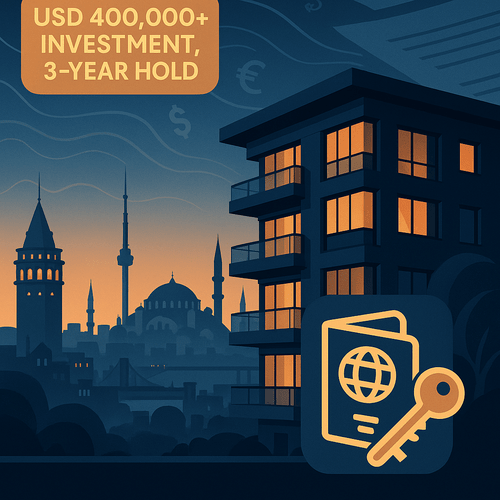
The Turkish citizenship by investment framework permits foreign nationals to qualify for citizenship after making an approved property investment and meeting legal requirements. Currently, the standard threshold cited in official guidance is the purchase of property worth at least USD 400,000 (or equivalent) and holding it for a minimum of three years. The investment must be recorded at the land registry and supported by a government valuation.
Inconclusive: thresholds and procedural details are reviewed periodically; check the latest government statements before transacting.
Internal summary: meet the qualifying value, register title correctly and observe the three‑year hold.
Investment thresholds and qualifying property types
Minimum amount and structure
- Minimum qualifying value: commonly reported as USD 400,000 equivalent at the date of purchase.
- Multiple properties: investors may combine several purchases to reach the threshold provided they are declared in a single application and registered accordingly.
Eligible property types and annotation
- Typical qualifying assets include new‑build residential units, certain commercial properties and completed developments authorised for foreign purchase.
- Some property types—agricultural land or certain restricted zones—may not qualify.
- A legal annotation (encumbrance) is usually placed on the title to prevent sale before the holding period lapses.
Callout — threshold essentials:
- Expect USD 400,000 as a baseline; always confirm the current official exchange‑rate equivalent.
- Ensure title is registered cleanly and that the government valuation aligns with the purchase price.
Internal summary: verify eligibility by property class and secure the required title annotation after purchase.
Typical timeline: purchase to passport
- Property acquisition and registration: 1–2 months when documentation and payment channels are in order.
- Residence permit and dossier preparation: 1–2 months concurrently, including translations and notarised documents.
- Citizenship application processing: commonly 6–9 months from submission, though cases vary.
Delays commonly arise from incomplete documentation, complex source‑of‑fund trails, or extended background checks.
Internal summary: plan for a 6–12 month process overall, allowing extra time for due diligence and legalisation steps.
Due diligence and legal compliance: non‑negotiables
Source‑of‑funds and AML checks
Authorities require detailed, verifiable proof that purchase funds derive from lawful sources. Prepare audited statements, sale agreements, corporate resolutions or trust documentation as relevant. Transfers must be traceable and made through regulated banking channels.
Title, seller and encumbrance checks
- Confirm the seller’s legal capacity and verify the property is free of liens.
- Use a reputable solicitor to conduct land‑registry searches, confirm planning status and verify that municipal licences are in order.
Professional engagement
Given the legal and language complexity, appoint an experienced Turkish lawyer and a licensed translator. Errors or omissions are frequent causes of delays and can jeopardise the citizenship outcome.
Internal summary: robust due diligence and lawful funding proofs are essential to pass vetting.
Taxation and financing: planning for costs and compliance
Purchase costs and taxes
- Transfer tax / title fees: Buyers generally face a transaction tax—commonly around 4% of the declared purchase price (verify locally). Additional notary, registration and agency fees typically apply.
- Annual property tax: Rates vary by municipality, often a small fraction of declared value (typically 0.1–0.6% depending on location and usage).
Financing and mortgage rules
- Cash requirement: For citizenship qualification the qualifying property is usually expected to be paid in full and registered without a mortgage encumbrance that would disqualify it. Use verified bank transfers to document the flow of funds.
- Mortgages: Mortgaged purchases often do not meet the qualifying criteria. However, non‑qualifying mortgaged assets can be part of a broader portfolio if the citizenship threshold is met by other cash purchases.
Tax residency considerations
Residency for tax purposes typically follows physical presence and domicile factors. If you intend to live in Turkey or exceed local residency thresholds, plan tax structuring with advisers to address global income reporting, relief under double taxation treaties and potential social security obligations.
Internal summary: budget for transaction taxes, use clear banking trails and obtain expert tax advice early.
Market trends: what investors should watch
Current dynamics (evidence‑based points)
- Demand concentration: Foreign buyers often target Istanbul, Antalya and Aegean/Mediterranean coastal regions for lifestyle and rental potential.
- Currency effect: Lira volatility has historically attracted foreign currency buyers able to capitalise on favourable exchange rates—but this also brings repatriation and real‑terms risk.
- New‑build popularity: Branded and developer‑backed new‑builds are commonly marketed to international investors for their warranties and management services.
Inconclusive: short‑term capital appreciation forecasts vary by district; rely on independent market reports and local sales data for precise projections.
Internal summary: focus on location, developer credibility and long‑term demand drivers, not speculative short‑term gains.
Risks and exit options: balanced planning
Principal risks
- Currency risk: Lira swings can affect repatriated returns and local purchasing power.
- Liquidity risk: The mandatory three‑year hold restricts immediate sale options; resale depends on local market demand.
- Regulatory change: Eligibility thresholds and programme rules have been revised in the past—future adjustments are possible.
- Title and construction risk: Incomplete developer compliance or title defects can materially delay outcomes.
Exit strategies
- Sell after holding period: The normal route is to list the property; urban and coastal markets generally attract buyers, though timing affects price.
- Long‑term rental: Lease the property to generate income during the holding period and beyond.
- Portfolio reallocation: Reinvest proceeds into other jurisdictions or asset classes post‑sale.
Callout — risk checklist:
- Confirm transferability and absence of encumbrances before purchase.
- Hedge currency exposure where appropriate.
- Factor three‑year illiquidity into financial planning.
Internal summary: mitigate currency and title risks, and plan exits conservatively.
Practical steps: how to proceed safely
- Pre‑qualification: Verify up‑to‑date qualifying thresholds and eligible property types.
- Source‑of‑fund readiness: Assemble bank statements, sale documents and corporate audits as needed.
- Select trusted professionals: Choose an experienced Turkish lawyer, independent valuer and a reputable real‑estate agent.
- Contract and payment: Execute purchase with clear escrow or bank transfer procedures, then secure the title annotation preventing early sale.
- Application submission: Compile the citizenship dossier accurately and monitor the administrative process.
Internal summary: structure your transaction to demonstrate clear compliance from day one.
Conclusion and call to action: expert guidance reduces risk
Investing in Turkish real estate for citizenship is a practicable, popular route that offers a real asset and a clear regulatory path—provided you plan carefully. The minimum threshold, hold period and paperwork form a strict framework that rewards meticulous preparation and credible, legal funding. There are no guarantees; outcomes depend on compliance, market conditions and administrative review.
For a personalised assessment of your suitability, tailored investment options and end‑to‑end support, consult Siyah Agents for expert guidance and a pragmatic plan that protects your interests and accelerates your application.
Key takeaways:
- Expect a roughly USD 400,000 minimum investment and a three‑year hold.
- Use reputable legal counsel, verify title and document source of funds.
- Plan for currency, liquidity and regulatory risks; model exit scenarios conservatively.
Featured image request: A refined urban panorama of Istanbul with a contemporary residence in the foreground.
Sources: Official Turkish citizenship by investment regulations; Siyah Agents programme data; recent Turkish property market analyses.

 Siyah Agents Blog