
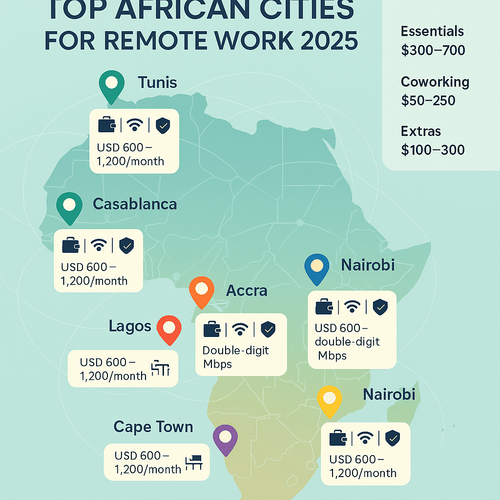
Remote work Africa in 2025: pick the city that fits your life
Remote work Africa is no longer a niche idea — it is a practical lifestyle for professionals, investors and retirees who want quality of life, strong connectivity and vibrant communities. This 2025 guide reviews the top African cities for digital nomads and remote workers, with fact-based insights on living costs, digital infrastructure, safety, and community. Where figures vary, typical ranges are shown and sources cited.
Why Africa — and why now
Africa’s leading cities combine affordability with fast-developing digital infrastructure and energetic communities. For English‑speaking professionals, this means lower living costs, improved internet speeds, and growing coworking networks that make remote work sustainable and sociable. Siyah Agents can help assess where your skills, capital and lifestyle align with local opportunities: https://siyahagent.com/assessment.
Quick context: expect monthly living costs (excluding rent) in major hubs to range broadly; full monthly budgets vary by city and lifestyle.
Cape Town — scenic base for balanced living
Cape Town remains a top draw for remote workers who value scenery and community.
- Cost of living: Typical monthly expenses (food, transport, utilities) range around USD 600–1,200, with rent adding more depending on neighbourhood.
- Connectivity: Fibre rollout continues across suburbs; average mobile/fixed broadband speeds in urban areas meet most remote work needs.
- Safety: Some neighbourhoods have higher crime rates; City Bowl, Sea Point and Claremont are popular with nomads and expatriates.
- Community: Numerous coworking spaces (Workshop17, WeWork-like venues, boutique hubs) and an active start-up scene.
Practical tip: choose accommodation near a reliable power supply and fibre availability. Cape Town’s blend of lifestyle and infrastructure makes it ideal for those seeking balance.
Nairobi — East Africa’s innovation hub
Nairobi fast-tracks connectivity and entrepreneurship, earning its reputation as a regional tech capital.
- Cost of living: Monthly budgets commonly fall between USD 600–1,200 depending on housing choices.
- Connectivity: Fibre and mobile broadband have improved markedly; reliable coworking venues offer strong Wi‑Fi and networking opportunities.
- Safety and logistics: Central suburbs like Westlands and Gigiri are favoured for safety and amenities.
- Community and opportunity: Nairobi’s accelerators, venture activity and events calendar create ample chances to meet founders and collaborators.
If your work benefits from startup networks, markets across East Africa or investment connections, Nairobi is a practical hub. Siyah Agents can advise on neighbourhood selection and business introductions: https://siyahagent.com/programs.
Lagos and Accra — West Africa’s energetic pair
Lagos and Accra offer cultural richness, entrepreneurial energy and fast-growing coworking scenes — with practical caveats.
Lagos (Nigeria)
- Living costs: Wide range; modest lifestyles can manage USD 600–1,200/month, but premium international living is higher.
- Infrastructure: Good coworking presence in Victoria Island and Lekki; power and traffic can affect day‑to‑day life.
- Safety: Choose established expat neighbourhoods and use local guidance.
- Opportunity: Vigorous startup activity and consumer markets make Lagos attractive to investors.
Accra (Ghana)
- Living costs: Comparable to Lagos for many items; stable neighbourhoods deliver good value.
- Connectivity: Improving fibre and mobile services; growing creative and tech communities.
- Community: Friendly expat and local entrepreneurial scenes; coworking spaces like Impact Hub foster collaboration.
Callout: West Africa rewards proactive planning. For both Lagos and Accra, prepare contingency plans for power, transport and security. Siyah Agents offers practical relocation and site-assessment support to mitigate these variables.
Other strong contenders: Kigali, Casablanca and Tunis
- Kigali (Rwanda): Noted for cleanliness, stability and improving connectivity. Living costs can be moderate; the city is increasingly appealing for remote workers seeking security and order.
- Casablanca (Morocco): A major economic centre with good infrastructure and proximity to Europe; Arabic and French are dominant but many professionals operate in English.
- Tunis (Tunisia): Cultural depth, reasonable costs and improving digital services make Tunis a quieter option for nomads.
These cities are often less crowded than the previously mentioned hubs and may suit those prioritising safety, order and lower noise.
Digital infrastructure: what to expect in 2025
Africa’s digital backbone has improved rapidly. Governments and private networks continue to expand fibre optics and 4G/5G mobile coverage. Typical expectations for major hubs in 2025:
- Average fixed broadband speeds in urban centres approaching double‑digit Mbps measured across consumer tests; business and coworking plans often deliver higher, more stable throughput.
- Mobile data remains a reliable fallback; many professionals combine mobile tethering with fixed connections.
- Challenges remain: peak‑hour congestion, pockets of instability and variable cybersecurity standards.
Action point: choose accommodation with documented fiber availability and a reputable ISP; use a VPN for sensitive work. Siyah Agents can help validate property internet readiness before you commit.
Safety and local intelligence: selecting the right neighbourhood
Safety is highly local. In every city, a few neighbourhoods concentrate reliable services, expat amenities and better public safety. Practical steps:
- Research neighbourhoods used by international schools and multinational offices.
- Join local online groups for up‑to‑date guidance.
- Consider short-term stays to test areas before signing long leases.
Siyah Agents provides local introductions and on‑the‑ground due diligence so you can choose secure, convenient addresses quickly.
Cost of living: realistic ranges and budgeting advice
Budgets vary by lifestyle and city, but typical monthly costs (excluding rent) for a single professional in major hubs fall into these bands:
- Essentials (food, transport, utilities): USD 300–700
- Coworking and comms: USD 50–250
- Leisure and extras: USD 100–300
Rent depends on neighbourhood: central apartments in Cape Town, Nairobi or Lagos can range widely. Always factor in connectivity, power backup and transport when choosing property.
Community and coworking: why place matters beyond connectivity
Coworking spaces are the social infrastructure that turns remote work into a scalable, networked life. They offer professional desks, meeting rooms, mentorship, and events. Look for spaces that provide:
- Reliable internet and business‑grade services
- Community events and networking sessions
- Local‑global mix of entrepreneurs, freelancers and investors
Examples: Workshop17 (Cape Town), Nairobi Garage, Venia Business Hub (Lagos), and Impact Hub Accra – all hubs with active programming and mentoring.
Tax, compliance and practical logistics for remote professionals
For investors and remote earners, tax and regulatory clarity matters. Consider:
- Residency rules and tax residency thresholds differ by country; consult a tax adviser.
- Local business registration and invoicing rules may affect freelancers and remote teams.
- Banking and payment rails: open a local bank account where needed and use reputable fintech services.
Siyah Agents advises on compliance and cross‑border structuring and can connect you with trusted local counsel and tax advisers. See programmes: https://siyahagent.com/programs.
Choosing a city: quick decision framework
Ask yourself: what matters most? Use this checklist to decide: proximity to markets, cost of living, internet reliability, safety, and community vibrancy.
Decision checklist:
- Do you need daily international connectivity or occasional travel?
- Are you relocating with family or solo?
- Do you prioritise nightlife and culture, or calm and stability?
Siyah Agents can run a personalised assessment to map your priorities to the best African city for remote work: https://siyahagent.com/assessment.
Internal summary: the essentials at a glance
- Cape Town: lifestyle and community; watch neighbourhood safety and power availability.
- Nairobi: innovation and connectivity; strong startup networks.
- Lagos and Accra: cultural energy and growth; plan for infrastructure variability.
- Kigali, Casablanca, Tunis: quieter, secure alternatives with improving digital services.
Connectivity and community are the twin pillars of successful remote work in Africa; local knowledge and measured planning reduce risk and multiply opportunity.
Final thoughts and next steps
Africa’s cities now offer genuine, varied options for remote work and investment. The best choice depends on personal priorities, family needs and business goals. With the right advice and on‑the‑ground checks, moving to one of these hubs can be professionally rewarding and personally enriching.
Ready to explore your options? Start with a tailored assessment from Siyah Agents and access programmes that help you relocate, invest, or scale in Africa’s digital hubs: https://siyahagent.com/assessment and https://siyahagent.com/programs.
This article draws on industry reports and Siyah Agents’ local knowledge. Figures are ranges and indicative; verify specifics with local sources and advisers before acting.

 Siyah Agents Blog