Introduction: Why Global Families Need Sophisticated Succession Planning
Succession planning matters more than ever for English‑speaking African professionals and investors with cross‑border lives. As assets, careers and children span continents, a basic will no longer suffices. Effective succession planning organises cross‑border asset transfers, mitigates political and economic risk, and enables flexible living for heirs — so your legacy endures wherever life leads.
Short takeaway: Plan proactively to preserve wealth, protect heirs and enable global mobility.
Succession planning: The Cross‑Border Asset Transfer Maze
Transferring assets internationally exposes families to divergent legal systems, tax rules and inheritance customs. Overlooking these differences can lead to costly delays, unexpected taxes or contested estates. The solution is technical, multi‑jurisdictional planning that respects both local law and your family’s long‑term objectives.
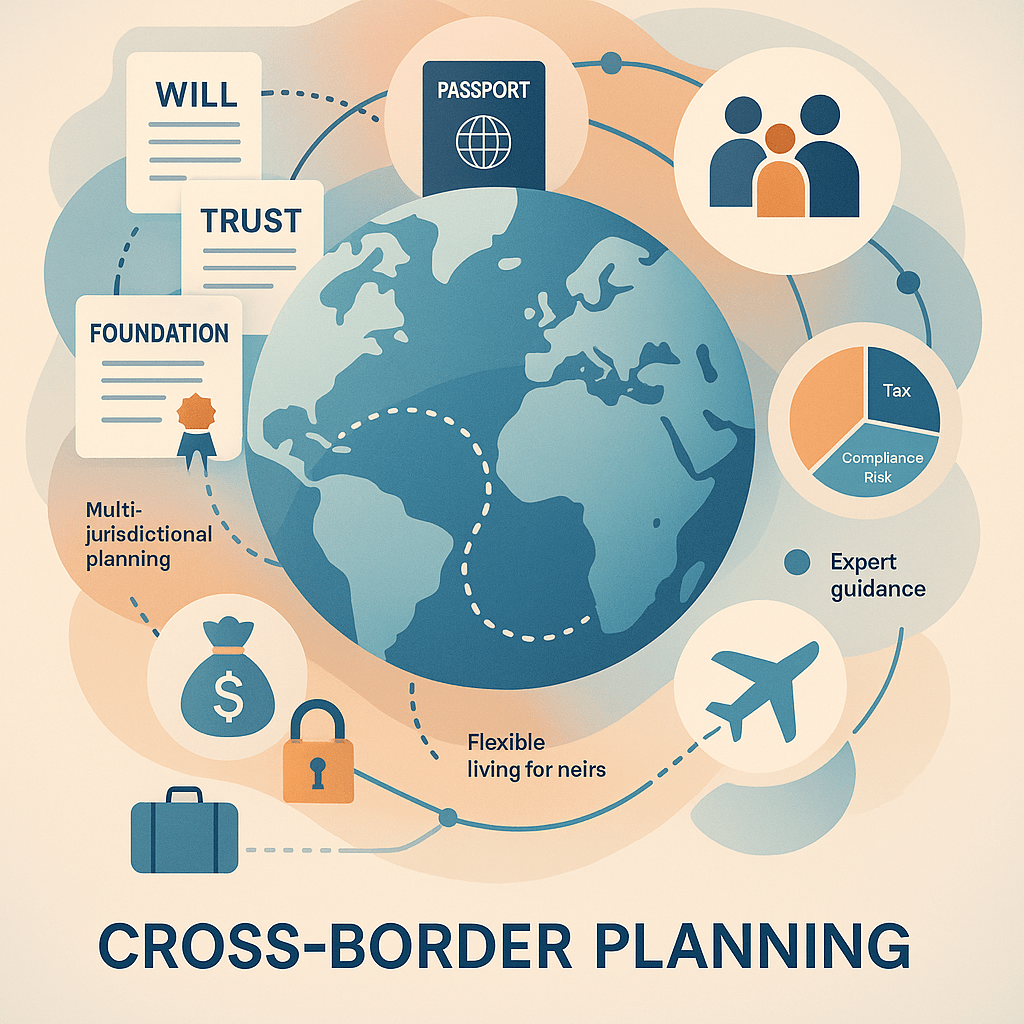
The Pillars: Wills, Trusts and Foundations
- Wills: Define intent, but enforceability varies by country. Local probate rules may supersede foreign wills for property held domestically.
- Trusts: Offer flexibility and privacy. Properly structured international trusts can ease administration and protect beneficiaries, but recognition differs between common‑law and civil‑law jurisdictions.
- Foundations: Useful where trusts are less effective; foundations provide a corporate vehicle for asset stewardship in many civil‑law countries.
Key insight: A tailored combination of wills, trusts and foundations — aligned with the jurisdictions in which you hold assets — forms the backbone of robust succession planning.
Enabling Flexible Living: Residency and Citizenship as Strategic Tools
Flexible living means giving heirs options: world‑class education, superior healthcare and the ability to relocate quickly if circumstances change. Residency‑by‑investment (RBI) and citizenship‑by‑investment (CBI) schemes are increasingly part of succession strategies because they enhance mobility and, in some cases, ease cross‑border administration.
How residency and citizenship support succession
- Mobility for heirs: Additional residencies or passports reduce visa friction for education, employment and business travel.
- Succession logistics: Residency in a favourable jurisdiction can simplify probate, banking access and property management for successors.
Evidence note: Programme rules and benefits change frequently. Verify current requirements and outcomes for any RBI/CBI scheme before committing. Consult Siyah Agents’ resources for tailored guidance: https://siyahagent.com/programs
Preserving Wealth: Mitigating Political and Economic Risk
Asset protection is central to succession planning for families with exposure to volatile currencies, regulatory shifts or political uncertainty. Diversifying legal domicile and holding assets in stable jurisdictions can reduce concentration risk and improve access to global markets.
Practical considerations include: international banking arrangements, multi‑jurisdictional investment allocation and liquidity planning to ensure heirs have timely access to funds. Tax planning must be compliant and bespoke — outcomes depend on personal circumstances and local law.
Callout: No structure is risk‑free. Regular review keeps plans aligned to changing laws and family circumstances.
Unique Challenges for African HNWIs
African high‑net‑worth families face particular hurdles when planning succession across borders:
- Currency controls may limit capital movement from certain jurisdictions.
- Inconsistent recognition of foreign trusts or wills can complicate administration.
- Regulatory change is unpredictable; policies affecting asset transfers may shift quickly.
Early engagement with advisers who understand both local dynamics and international practice reduces friction and improves outcomes.
Family Governance and Intergenerational Preparedness
Succession succeeds when governance and education go hand in hand. Establish clear family governance: roles, decision rights, dispute resolution and philanthropic objectives. Educate heirs in stewardship, fiduciary responsibility and risk‑aware investing to preserve family capital across generations.
Practical governance steps
- Create a documented family charter or governance code.
- Establish regular family meetings and a structured education programme for heirs.
- Appoint independent trustees or professional family officers where appropriate.
Internal summary: Legal structures (wills, trusts, foundations) must be reinforced by governance and education to ensure assets transfer smoothly and values endure.
Practical Tools: Structures, Vehicles and Timing
Choose structures that match your assets, jurisdictions and family goals. Typical tools include domestic and offshore trusts, private foundations, holding companies, and succession‑friendly corporate structures for family businesses. Timing matters: start early to avoid last‑minute compromises and rushed, riskier decisions.
Example approach: Phase 1 — audit global assets and liabilities. Phase 2 — design legal and tax‑compliant structures. Phase 3 — implement governance, education and liquidity plans.
Tax, Compliance and Due Diligence: Don’t Skip the Details
Cross‑border succession requires meticulous tax and regulatory planning. Anti‑money‑laundering checks, source‑of‑fund documentation and transparent reporting are standard. Compliance reduces the risk of application delays, asset freezes or reputational exposure. Always seek independent legal and tax advice in each relevant jurisdiction.
The Role of Expert Advisors: Why Siyah Agents Matters
Succession planning is a multidisciplinary project: legal, tax, fiduciary, banking and immigration expertise must co‑operate. Siyah Agents provides bespoke, end‑to‑end advisory for global African families — from initial asset audits to implementing trusts, residency solutions and governance frameworks.
- Personal strategy sessions to map family goals and liabilities.
- Jurisdictional comparisons tailored to asset mix and family priorities.
- Complete application and implementation support, including local partner coordination.
Explore our tailored services and programmes: https://siyahagent.com/programs
Callout — Siyah Agents in brief: Bespoke planning, global network, discreet execution.
Implementation Considerations and Typical Timelines
Timelines vary by structure and jurisdiction. Establishing trusts or foundations and completing compliance can take weeks to months; residency or citizenship routes may take longer. Budget for professional fees, due diligence, legal and tax advice, and potential relocation costs.
Conclusion: Plan Today for a Resilient, Global Legacy
Succession planning for global families is strategic, not reactive. By combining technical legal structures with governance, education and mobility options, families can preserve wealth, protect heirs and enable flexible living across generations.
Ready to secure your family’s legacy? Contact Siyah Agents for tailored, confidential advice and discover our services and programmes: https://siyahagent.com/assessment
Key insights:
- Succession planning combines legal, financial and governance measures.
- Residency and citizenship options support mobility and succession logistics.
- Expert, bespoke advice ensures plans remain robust and compliant.
This article is informational and does not constitute legal, tax or financial advice. Seek independent professional advice before acting.

 Siyah Agents Blog